How Much Space Do Chickens Need? Coop and Run Sizes
We earn from qualifying Amazon purchases. We haven't tested these products ourselves. We chose them from specs and what chickens need. How we make money.
Crowded hens are grumpy hens. You see it first at the feeder. One bird gets chased off every time. Then feathers start to go missing from backs and tails. Egg numbers drop and the bedding turns wet and smelly far too fast.
Our top picks
Paid links. We earn from qualifying Amazon purchases. We chose these from specs and owner feedback, not our own testing. Photos show the type of gear, not the exact product.
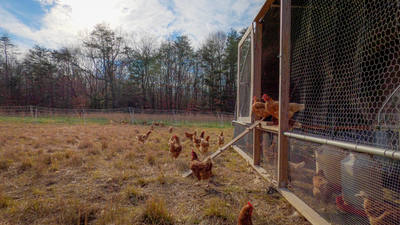 Best if you want room to growAivituvin Walk-in Chicken Coop for 8 ChickensA walk in coop gives you space for more hens later.Check price on Amazon →Details ↓Photo: USDA, CC0
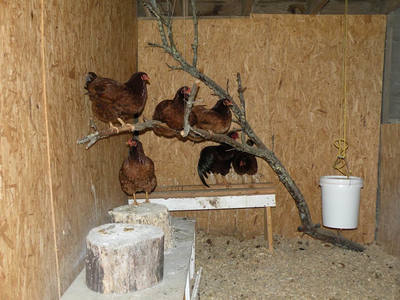 Best ready made roost for 8 to 10 hensPETSFIT Square Chicken Roosting PerchA freestanding ladder roost with flat bars.Check price on Amazon →Details ↓Photo: Living Off Grid, CC BY 2.0
Nine times out of ten the fix is simple. Give them more room.
In this guide
The short answer
For standard laying hens:
- Inside the coop: 3 to 4 square feet per hen.
- In the run: about 10 square feet per hen.
- Roost: 8 to 10 inches of bar per hen.
- Nest boxes: 1 box for every 4 or 5 hens.
The coop and run figures come from the eXtension poultry guide on space allowances. The roost and nest box numbers are what most backyard keepers use.
Bantams are smaller. You can plan on about 2 square feet each inside. Big breeds like Brahmas and Jersey Giants need the top of the range or a bit more.
Why the coop number assumes a run
That 3 to 4 square feet only works if the hens spend their day outside. The coop is mostly a bedroom. They sleep there and lay there.
If your hens are shut in all day for long winter spells then give them more. Plan on 6 to 8 square feet each inside. Bored hens in a tight space start pecking each other.
How to check a coop before you buy
Kit labels are often generous. A coop sold for 6 hens may only have room for 3. Here is a two minute check.
- Find the size of the house part in the listing. Ignore the run.
- Multiply length by width in feet.
- Divide by 4.
A 3 by 4 foot house is 12 square feet. That is 3 hens. A 4 by 6 foot house is 24 square feet. That is 6 hens.
Our coop kit buying guide uses the same sum on each pick.
Aivituvin Walk-in Chicken Coop for 8 Chickens
A walk in coop gives you space for more hens later. You can also stand up inside to clean. Check the floor area against your flock size before you order.
What to like
- Room to stand while you clean
- Space to add roosts
- Floor liner included
Watch out for
- Big flat pack to build
- Add hardware cloth low down
Paid link. We may earn a commission.
Roost space
Hens like to sleep shoulder to shoulder. They still need about 8 to 10 inches each. Larger breeds want closer to 12.
Use a flat bar about 2 to 4 inches wide. A 2 by 4 with the wide side up works well. Hens can cover their toes with their feathers on cold nights. Set the bar higher than the nest boxes. Otherwise they sleep in the nests and soil them.
Leave about 12 inches between bars if you have more than one. Stagger them so birds on the top bar don’t drop onto the ones below.
Photo: Living Off Grid, CC BY 2.0PETSFIT Square Chicken Roosting Perch
A freestanding ladder roost with flat bars. You can set it in a walk in coop with no carpentry. It gives each bird plenty of bar space.
What to like
- Flat bars keep toes warm
- No tools to fit
- Moves out of the way for cleaning
Watch out for
- Needs a walk in coop to fit
- Wood needs a scrub now and then
Paid link. We may earn a commission.
Nest boxes
One box for every 4 or 5 hens is plenty. They will all pick the same favorite box anyway. A box about 12 inches square suits most breeds. Our nesting box guide has more on height and bedding.
Ventilation grows with the coop
More birds means more moisture and ammonia. A rough rule is 1 square foot of vent for every 10 square feet of floor. Put vents up high near the roof so the air moves above the roost and not across it. Cover every vent with half inch hardware cloth. Our ventilation guide explains the details.
Sizing the run
Ten square feet per hen is a good target. Six hens need about 60 square feet. That is a run about 6 by 10 feet.
Bigger is better here. A small run turns to bare dirt in a few weeks. It then goes to mud when it rains. If your yard is tight you can let the hens out to roam when you are home. A covered add on run is the other easy fix. Our run size and fencing guide goes deeper.
Plan for the flock you will have
Almost everyone gets more hens than they planned. People call it chicken math. If you want 4 hens then build or buy for 6. The extra room costs little now and saves a second coop later.
Quick checklist
- House floor area divided by 4 gives your hen count.
- Run area divided by 10 gives your hen count.
- Use the smaller of the two numbers.
- Allow 8 to 10 inches of roost per bird.
- Add 1 nest box per 4 or 5 hens.
Sources
- eXtension Poultry. Space allowances in housing for small and backyard poultry flocks.
- University of Maryland Extension. Housing requirements for small flocks.