How to Keep Rats and Mice Out of a Chicken Coop
We earn from qualifying purchases. How we pick.
Our top picks
- Best for covering vents and building a buried apronLand Guard 19 Gauge Hardware Cloth 1/2 inchCheck price on Amazon →
- Best for keeping feed away from rodents overnightGrandpa's Feeders 20 lb Treadle FeederCheck price on Amazon →
- Best for closing the pop hole every night without failChickenGuard Premium Automatic Door OpenerCheck price on Amazon →
Rats and mice don’t come to your coop for the chickens. They come for the feed, the water and a warm dry place to nest. Take those three things away and most rodents will go looking for an easier meal.
That sounds simple. It isn’t always. The University of Nebraska Extension says a mouse can get through a gap slightly bigger than 1/4 inch. A rat needs a gap just over 1/2 inch. That’s a lot smaller than most people expect.
In this guide
Know what you’re dealing with
Rodents are mostly active at night. So the first clue is usually droppings or gnaw marks and not an actual animal. University of Maryland Extension describes house mouse droppings as small black grains like rice. Norway rat droppings are bigger. They’re about 3/4 inch long and bean shaped. Other signs include holes around the base of the coop, a strong ammonia smell and piles of shredded nesting material.
Seeing one in daylight is bad news. University of Florida IFAS Extension estimates that 20 to 50 rodents go unseen for every one spotted during the day around barns and poultry houses.
They breed fast too. Maryland Extension says one female house mouse can produce up to 60 young a year. Rodents can also carry up to 45 diseases including salmonellosis and leptospirosis. This is a problem worth fixing early.
Seal every gap with the right metal
Chicken wire won’t stop a rat. It’s made to keep chickens in. Rats chew through it or slip between the twists.
Nebraska Extension recommends 19 gauge hardware cloth with 1/2 by 1/2 inch mesh to keep rats out. Keeping mice out takes 24 gauge with 1/4 inch mesh. Most backyard keepers fit half inch galvanized hardware cloth over vents, windows and gaps. The same guide calls 1/2 inch screen a reasonable trade between airflow and rodent control. Anything finer cuts ventilation a lot. Our chicken coop ventilation guide covers how much air your hens need.
Land Guard 19 Gauge Hardware Cloth 1/2 inch
It matches the 19 gauge half inch spec that extension guides give for keeping rats out. Galvanized welded mesh holds its shape over vents and gaps.
What to like
- Meets the 19 gauge rat exclusion spec
- Welded joints don't unravel when chewed
- Galvanized coating resists rust in damp soil
Watch out for
- Half inch mesh won't stop the smallest mice
- Cut edges are sharp so wear gloves
Pack small gaps under 3/4 inch with copper or stainless steel wool. Plain steel wool works for a while but it rusts out. Keep the gap under any people door below 1/4 inch.
Then there’s the ground. Nebraska Extension says rats can burrow straight down at least 36 inches. A coop on bare dirt is an open invitation. The usual fix for a backyard coop is a buried apron of hardware cloth laid flat around the base. A digging rat hits mesh and gives up. You can also lay mesh right under the floor of the run. Our guide to predator proofing a chicken coop walks through apron options.
Don’t forget height. Rats can jump 36 inches straight up and 48 inches across. They climb pipes, vines and trees. Cut back any branch that touches the roof.
Cut off the food and water
This is where most coops fail. Spilled feed on the floor is a free buffet every night.
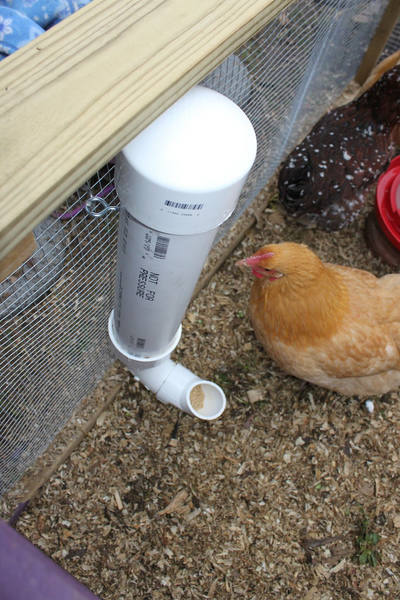
Store feed in metal cans with tight lids. Rats chew through plastic bins. Sweep up spills before dark. Never leave an open feeder out overnight. A treadle chicken feeder keeps feed under a metal lid that only opens under a hen’s weight.
Grandpa's Feeders 20 lb Treadle Feeder
The lid only lifts when a chicken stands on the treadle. A mouse or young rat is usually too light to open it.
What to like
- Galvanized steel body resists chewing
- Holds 20 lbs of feed
- Cuts down on spilled feed
Watch out for
- Hens need a few days to learn the treadle
- Heavy rats may sometimes trigger it
Water matters too. Maryland Extension suggests nipple waterers because they leave rodents far less to drink than an open dish. A few chicken waterer nipples in a bucket leave no standing water around. Fix any dripping tap near the coop.
Collect eggs every day as well. Rats will happily take eggs and small chicks.
Clean up around the coop
Rodents hate open ground. They want cover. Florida IFAS recommends a clear strip at least 3 feet wide around buildings with no brush, trash or weeds. Keep the grass short. Move woodpiles, old pallets and spare lumber well away.
Distance matters here. Florida IFAS says rats rarely travel more than 100 feet from their nest. Mice usually stay within 30 feet. That junk pile by the fence may be their home base.
Shut the door and trap what’s left
The pop door is the biggest hole in any coop. Leave it open all night and the rest of your sealing doesn’t matter much. An automatic coop door closes it at dusk once the hens have gone to roost. Our automatic door buying guide covers what to check first.
If rodents are already inside you’ll need traps. Set snap traps along walls and near holes where rodents run. Florida IFAS suggests baiting with peanut butter, whole nuts or bits of meat. Always put traps inside a box or covered station your hens can’t reach. Chickens peck at anything.
Be very careful with poison. Chickens may eat the bait. They may also eat a poisoned mouse. If you use rodenticide at all keep it in a tamper resistant bait station outside the run. Florida IFAS notes that zinc phosphide has no antidote and isn’t suitable around livestock.
One last tip. Once a month walk around the coop with a flashlight after dark and try to push a pencil into every gap you find. If the pencil slides in then a mouse can get in too.
Sources
- Rodent Control in Agricultural Buildings (G1530), University of Nebraska Extension
- Rodent Control for Small Poultry Farms, University of Maryland Extension
- Controlling Rats and Mice around the Farm, UF IFAS Extension Santa Rosa County
How we picked
We compare maker specs with owner reviews and expert sources like university extension poultry guides. We look for the problems owners report again and again. Then we keep the products whose specs fit what a small flock needs. These picks come from that research and not from our own hands on trials. Nobody pays for a place in our guides. Read how we choose products.