How to Predator-Proof a Chicken Coop
We earn from qualifying Amazon purchases. We haven't tested these products ourselves. We chose them from specs and what chickens need. How we make money.
You walk out with the morning scraps and something is wrong. The run is too quiet. There are feathers by the fence and a hole under the corner that was not there yesterday.
Our top picks
Paid links. We earn from qualifying Amazon purchases. We chose these from specs and owner feedback, not our own testing. Photos show the type of gear, not the exact product.
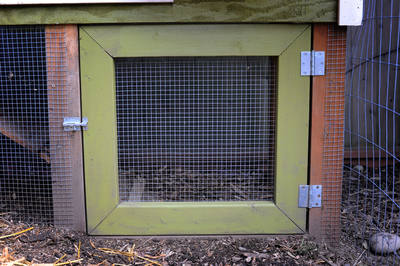 Best single predator upgradeTrenk Hardware Cloth, half inch mesh, 36 in by 50 ftThis is the mesh most keepers use to stop raccoons, dogs and foxes.Check price on Amazon →Details ↓Photo: furtwangl, CC BY 2.0
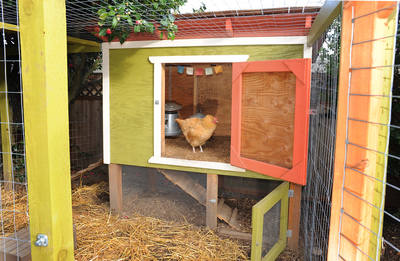
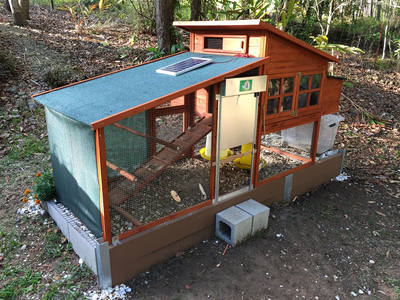 Best for keeping to a lockup routineRUN-CHICKEN T50 Automatic Coop DoorIt shuts the pop door at dusk and opens it in the morning.Check price on Amazon →Details ↓Photo: sridgway, CC BY 2.0
Most keepers lose a bird this way sooner or later. The good news is that nearly all of it can be stopped. Predators are lazy. They go for the easy meal. Your job is to make your coop the hard one.
In this guide
Know who you are up against
Different animals attack in different ways. The eXtension guide on predator management lists the usual suspects and the signs they leave.
- Raccoons work at night. They have clever hands and open simple latches. They also reach through chicken wire and grab a bird.
- Foxes and coyotes dig under fences and carry a hen off whole.
- Dogs are often the neighbor’s pet. They kill for fun and leave birds behind.
- Weasels and mink squeeze through tiny gaps. A hole the size of a coin can be enough.
- Hawks hunt by day. Owls hunt at night. Both come from above.
- Rats and snakes go for eggs and chicks.
Look at the scene to work out who came. A missing bird with no mess points to a fox, coyote or hawk. Bites all over usually mean a dog. Birds killed and left points to a weasel.
Swap chicken wire for hardware cloth
Chicken wire keeps chickens in. It does not keep predators out. A raccoon can tear it or reach straight through.
Use galvanized hardware cloth with half inch holes. The University of Maryland Extension suggests this mesh over coop windows to keep out rodents and varmints. A paw can’t get through it and neither can a rat.
Put it in these places:
- Every window and vent on the coop.
- The bottom 3 feet of the run walls at least. The whole run is better.
- Any gap under the eaves.
Fix it with screws and washers rather than staples. A raccoon can pry staples loose in a night.
Trenk Hardware Cloth, half inch mesh, 36 in by 50 ft
This is the mesh most keepers use to stop raccoons, dogs and foxes. A 36 inch roll is the right height for the lower run walls. Put offcuts over every vent and window.
What to like
- Much stronger than chicken wire
- Holes too small for reaching paws
- A 50 ft roll covers a lot
Watch out for
- Slow to cut and fit
- Sharp cut edges so wear gloves
Paid link. We may earn a commission.
Stop the diggers
Foxes, dogs and coyotes dig at the base of the fence. You have two ways to stop them.
The first is to bury the mesh. Dig a trench about 12 inches deep around the run and run the hardware cloth down into it.
The second is easier. Lay an apron of hardware cloth flat on the ground. Run it about 2 feet out from the base of the fence and pin it down. Animals dig right at the fence line. They hit the mesh and give up. Grass grows through in a few weeks and hides it.
Use latches a raccoon can’t open
A simple hook and eye is no match for a raccoon. Neither is a plain slide bolt. Use latches that need two moves to open. A spring loaded barrel bolt with a clip through it works well. So does a carabiner on a hasp.
Check every door. That includes the nest box lid and the cleanout hatch. Raccoons find the one you forgot.
Cover the top
Hawks and owls can drop straight in. Climbers like raccoons can go over a fence. A solid roof or tight netting over the run stops both. The Maryland Extension guide suggests overhead netting for outdoor runs.
Lock up every night
This is the habit that saves the most birds. Hens head inside on their own at dusk. Close the pop door behind them every single night.
An automatic door takes the risk out of a late night home. It closes on a light sensor or timer.
RUN-CHICKEN T50 Automatic Coop Door
It shuts the pop door at dusk and opens it in the morning. Your flock is locked in even when you get home late.
What to like
- Closes on time every night
- Battery powered so no wiring
- Light sensor or timer
Watch out for
- Watch it close for the first week
- A hen left outside gets locked out
Paid link. We may earn a commission.
Do a head count when it closes for the first week or two. A hen who dawdles will be shut out.
Daily habits that help
- Collect eggs every day. Eggs draw rats and snakes.
- Store feed in a metal can with a lid. Spilled feed brings rodents and rodents bring snakes.
- Walk the fence line once a week. Look for new holes and loose mesh.
- Trim back long grass and brush near the run. Predators like cover.
- Talk to your neighbors about loose dogs.
Where to start on a budget
Do it in this order. Lock up every night. Cover vents and windows with hardware cloth. Upgrade the latches. Add a digging apron. Then cover the run.
The first three cost very little and stop most attacks. If you are still choosing a coop see our coop kit buying guide and our tips on where to place a coop.
Sources
- eXtension Poultry. Predator management for small and backyard poultry flocks.
- University of Maryland Extension. Housing requirements for small flocks.