Chicken Roosting Bars: How High, How Long and What to Buy
We earn from qualifying purchases. How we pick.
Our top picks
- Best for flocks of 8 to 10 hensPETSFIT Square Chicken Roosting PerchCheck price on Amazon →
- Best for heavy breeds and older hensVehomy Chicken Roosting LadderCheck price on Amazon →
- Best for adding bars to a coop you already ownCuffUp Chicken Perch 2-PackCheck price on Amazon →
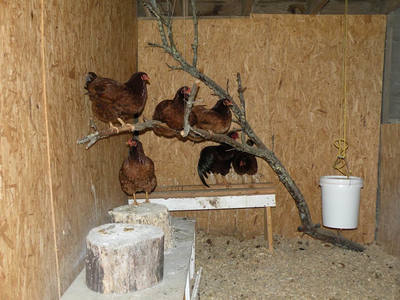
Give each standard hen about 8 inches of roost bar and set it 18 to 36 inches off the litter. That’s the short answer from Texas A&M AgriLife Extension. The rest is about getting the details right so your birds actually use it.
All our picks
Roost frames
- Best for flocks of 8 to 10 hensPETSFIT Square Chicken Roosting PerchA ready-made frame with several bars at staggered heights.Check price on Amazon →Details ↓
Roost ladders
- Best for heavy breeds and older hensVehomy Chicken Roosting LadderThe rungs climb in steps.Check price on Amazon →Details ↓
Roosting bars
- Best for adding bars to a coop you already ownCuffUp Chicken Perch 2-PackTwo wooden bars of different lengths.Check price on Amazon →Details ↓
Chick perches
- Best for chicks in the brooderTonGass 16 inch Bamboo Chick PerchA short polished bamboo bar on a stable base.Check price on Amazon →Details ↓
Cleaning
- Best for clearing droppings boards and floorsBully Tools 11-Gauge Steel ScraperAn all-steel blade on a long handle.Check price on Amazon →Details ↓
In this guide
How much bar each hen needs
Extension figures land in a tight range. Texas A&M asks for 8 inches per bird. A Missouri extension housing workshop says 8 to 9 inches. The University of Maryland Extension goes as low as 6 inches.
So do the math with 8 and round up. Six hens need 48 inches. Ten hens need 80 inches. That’s two bars of roughly 40 inches each.
Don’t be alarmed when your flock ignores half of it. Hens pack tight on cold nights and spread out in summer heat. Extra length costs you nothing and stops the low hen from getting shoved off. Bantams need less. Big breeds like Brahmas and Orpingtons need more. Mixed flocks are easiest to plan by the biggest bird you own. Our guide to how much space chickens need covers floor area for the same headcount.
If you’d rather skip the saw a freestanding multi-bar roost frame gives you the length in one piece.
PETSFIT Square Chicken Roosting Perch
A ready-made frame with several bars at staggered heights. It drops into a walk-in coop with no carpentry and gives a medium flock plenty of total bar length.
What to like
- Sized for 8 to 10 birds
- Freestanding so no wall fixings
- Staggered bars spread the flock out
Watch out for
- Needs a fairly roomy coop floor
- Droppings from upper bars land on lower ones
How high and how far apart
Texas A&M puts poles 18 to 36 inches above the litter. Maryland suggests 24 inches. Both work. Lower is kinder to heavy birds and old hens who jump down hard. Higher suits light breeds that like to get up away from trouble.
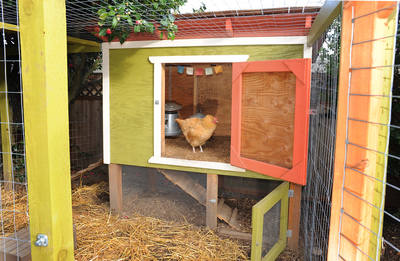
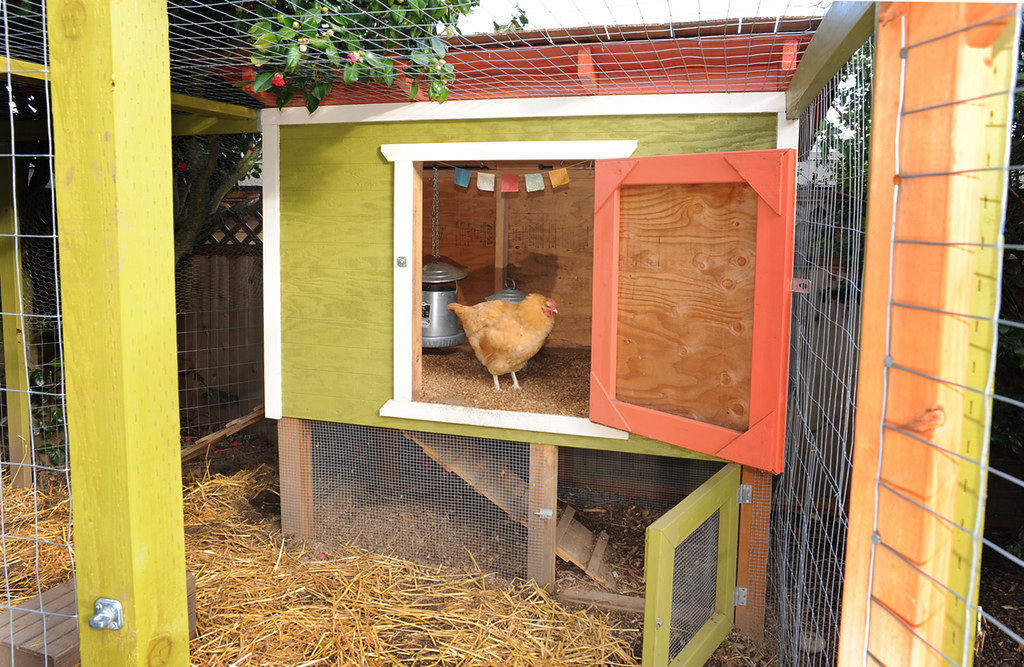
One rule matters more than the exact number. Chickens sleep on the highest spot they can reach. Maryland says nests and roosts should be kept apart so birds don’t sleep in the nest boxes. Put the roost higher than your nests by a good margin and you’ll get cleaner eggs. Our nesting box guide covers box height in more detail.
Spacing between bars matters too. Texas A&M says 14 inches apart. The Missouri workshop says 12 to 14 inches. On a ladder-style roost that spacing also keeps the birds on the top rung from soiling the ones below. Check your headroom as well. A hen on the top bar shouldn’t have her comb brushing the roof.
Vehomy Chicken Roosting Ladder
The rungs climb in steps. A hen can hop up one level at a time instead of making one big jump.
What to like
- Easy climb for heavy birds
- Leans against a wall to save floor space
- Simple wooden build
Watch out for
- Lower rungs sit under upper ones
- Fewer total inches than a big frame
What the bar should be made of
Wood wins. The Missouri extension slides suggest 1½ inch dowels or 2x2 lumber. Plenty of keepers in cold places use a 2x4 laid flat instead. A hen on a wide flat bar can sit down over her toes and keep them under her feathers on frosty nights. Either way you should sand off splinters and round the edges so feet stay healthy.
Skip metal pipe and plain PVC. Metal gets very cold in winter. PVC is slick and hard to grip. Never use treated lumber for something your birds stand on all night.
A quick upgrade for an existing coop is a pair of wooden roosting bars in two sizes screwed in at different heights.
CuffUp Chicken Perch 2-Pack
Two wooden bars of different lengths. Mount one high for the adults and one lower as a step or for smaller birds.
What to like
- Two sizes in one pack
- Natural wood grip
- Fits most small coops
Watch out for
- You supply the screws and brackets
- Short bars only suit a small flock
Getting chicks to use it
Young birds don’t always know what a roost is for. The Missouri slides note you may have to teach them. Start early. A low freestanding chick perch in the brooder lets them practice a few inches off the floor. Once they move to the coop you can lift sleepy birds onto the bar after dark for a few nights. Most catch on within a week. Use a dim headlamp so you don’t spook the rest of the flock.
TonGass 16 inch Bamboo Chick Perch
A short polished bamboo bar on a stable base. It sits low enough for week-old chicks to hop onto.
What to like
- Low height suits tiny chicks
- Smooth bamboo is easy to wipe
- Freestanding so it moves with you
Watch out for
- Too small for adult hens
- Only fits a few chicks at once
Meat birds are the exception. Maryland Extension says broilers are too heavy to balance and shouldn’t get perches at all.
Plan for what lands underneath
Roosts are where most of the overnight droppings pile up. Texas A&M recommends a screened dropping pit under the roost so hens can’t walk in the mess. A simple droppings board does a similar job in a small coop. Keep that area dry and you’ll have far fewer fly problems. Our guide on how to clean a chicken coop walks through the routine.
A long-handled steel coop scraper makes that daily or weekly scrape much faster.
Bully Tools 11-Gauge Steel Scraper
An all-steel blade on a long handle. It lifts dried droppings off boards and floors without you reaching into the coop.
What to like
- Heavy steel blade
- Long handle saves your back
- Made in USA
Watch out for
- Heavier than plastic scrapers
- Wide blade can be awkward in tiny coops
Here’s the tip worth stealing. Before you screw anything in you should stand a broom handle where the bar will go and check that you can reach under it with a scraper. No easy reach means the bar goes somewhere else.
Keep reading
Read next: chicken coop ventilation and the best coop for 6 hens. Or browse the roost and climate gear in the shop.
Sources
- The Small Laying Flock, Texas A&M AgriLife Extension
- Construction Specific Requirements, University of Maryland Extension
- Chickens in the Backyard: Housing and Space Requirements, University of Tennessee Extension
How we picked
We compare maker specs with owner reviews and expert sources like university extension poultry guides. We look for the problems owners report again and again. Then we keep the products whose specs fit what a small flock needs. These picks come from that research and not from our own hands on trials. Nobody pays for a place in our guides. Read how we choose products.